ESRS S1 Own workforce
ESRS S1 – Own workforce
| Disclosure requirement | Name with reference | |
|
SBM-3 |
Material impacts, risks, and opportunities and their interaction with strategy and business model |
|
|
S1-1 |
||
|
S1-2 |
Processes for engaging with own workers and workers’ representatives about impacts |
|
|
S1-3 |
Processes to remediate negative impacts and channels for own workers to raise concerns |
|
|
S1-4 |
||
|
S1-5 |
||
|
S1-6 |
||
|
S1-7 |
Characteristics of non-employee workers in the undertaking’s own workforce (Transitional provision under ESRS used) |
|
|
S1-8 |
Collective bargaining coverage and social dialogue (Transitional provision under ESRS used) |
|
|
S1-9 |
||
|
S1-10 |
||
|
S1-12 |
Persons with disabilities (Transitional provision under ESRS used) |
|
|
S1-13 |
Training and skills development metrics (Transitional provision under ESRS used) |
|
|
S1-14 |
Health & safety metrics (Transitional provision under ESRS used) |
|
|
S1-15 |
Work-life balance (Transitional provision under ESRS used) |
|
|
S1-16 |
||
|
S1-17 |
voestalpine is committed to providing a working environment based on the values of fairness, safety, and mutual respect. The company’s approach revolves around the principles of offering optimal working conditions, treating all workers equally, and actively promoting equal opportunities. Diversity is considered a strength—whereby everyone is equal regardless of gender, age, origin, or other traits. voestalpine is also committed to respecting labor-related rights throughout its entire value chain. These principles form the basis for sustainable growth.
The following table provides specific information on SBM‑3:
Topic/sub‑topic |
|
|
|
Impact, risk, opportunity (IRO) |
|
Description |
|
Value chain |
|
Time horizon |
|
Affected stakeholders |
|
|
|
|
|
|
|
|
|
|
|
|
|
Working conditions and other work-related rights |
|
|
|
Attractive working conditions |
|
voestalpine offers attractive salaries and benefits as well as flexible working hours which promotes employee retention. |
|
▷▶▷ |
|
|
|
|
Health and safety |
|
|
|
Healthy and safe working conditions at voestalpine |
|
voestalpine strengthens the safety and health of its workforce through comprehensive occupational health and safety management, as well as periodic training and awareness-raising activities that enhance well-being and improve the capacity to identify risks and apply protective measures. |
|
▷▶▷ |
|
|
|
|
|
|
|
Accidents at work, injuries, and occupational illnesses |
|
voestalpine employees are exposed to occupational hazards and risks that can cause accidents, injury, illness, or disease due to the industry, the nature of their job, or the environment in which they work. Regular risk assessments and the definition of protective measures reduce the severity of incidents and/or likelihood of occurrence. |
|
▷▶▷ |
|
|
|
|
|
Equal treatment and opportunities for all |
|
|
|
Equal opportunities for all employees |
|
Increasing employee satisfaction and retention as well as promoting equal opportunities for all employees through an inclusive and diversity-promoting HR strategy, especially with regard to diversity. This topic is anchored as a prioritized strategic field of action in the HR Strategy 2030+. |
|
▷▶▷ |
|
|
|
|
Training and skills development |
|
|
|
Personal development and training |
|
In addition to the basic training, many different continuing education programs are offered to promote the professional and personal development of all employees (educational programs provided by individual companies, divisional and Group specialist academies, and management programs). voestalpine is an important provider of apprenticeships, particularly in the DACH region. This helps to promote the personal and professional development of employees and improve employee satisfaction. |
|
▷▶▷ |
|
|
|
|


|
||||||||||||||||||||||||||||||||||||||||||||||||||||||||


Impact, risk, and opportunity management
S1‑1 – Policies related to own workforce
In its strategic orientation, voestalpine pursues a holistic approach toward responsibility for its employees. Policies that address the company’s own workforce are designed to create a safe, fair, and conducive working environment in which employees can unfold their potential. These policies are based on the Group-wide HR Strategy 2030+, which addresses material impacts and systematically reacts to changes in the economic, social, and technological environment.
HR Strategy 2030+
The HR Strategy 2030+ aims to strengthen voestalpine’s position as an attractive employer and to make a decisive contribution to the company’s competitiveness by acquiring, developing, and retaining qualified and motivated employees in the long term. This objective is taken directly from the voestalpine Group Strategy 2030+. The HR strategy covers all voestalpine employees at all its companies throughout the Group.
In order to remain competitive in the face of an ever-changing environment and to continue offering employees an attractive working environment, the HR strategy, which was first established in 2017, is reviewed every two to three years. This review is carried out in cooperation between the HR managers of the divisions and Group HR Management. An environmental analysis is conducted on the basis of the Group strategy to identify the critical success factors, review their alignment with the HR mission statement, and translate them into concrete spheres of action.
The HR Strategy 2030+ addresses a number of IROs. Material positive impacts include attractive working conditions, safe and healthy jobs, promoting equal opportunity, personal development, and employee training. Material negative impacts include accidents at work, injuries, and occupational illnesses.
The environmental analysis identified the following key challenges for the coming years: demographic change and labor shortages, a change in the values of existing and future employees, increasing awareness of sustainability and environmental protection, and technological advancements and digitalization. These developments can influence the critical success factors on which HR bases its strategic spheres of action.
As part of the HR Strategy 2030+, the critical success factors define the key fields of action for positioning voestalpine as a forward-looking employer. The focus in this regard is on the long-term retention of qualified and motivated workers and on creating a working environment that promotes diversity, security, and development opportunities. This includes, first of all, targeted positioning of voestalpine as an attractive employer. In addition to traditional employer branding measures, the emphasis is on promoting women, expanding diversity, and improving apprenticeships. Closely related to this is the topic of identity and changes in values, which covers aspects such as work-life balance, life-phase oriented work models, and sustainability.
Another focus is on developing an inclusive corporate culture. Diversity is promoted throughout the Group and a particular focus is placed on the issue of female empowerment. Talent management also plays a central role: by introducing global standards, high-performance talented individuals are to be systematically identified, further developed, and retained at the company in the long term. voestalpine also pursues a comprehensive health management strategy with measures to promote health and safety at work.
In order to prepare employees for ongoing changes, structures and competencies in the area of change management are being improved. Efficient HR processes and targeted use of modern technologies help to increase both quality and efficiency. In order to expand HR IT systems, a transformation for the further digitalization of global HR processes was launched.
Strategic spheres of action
In order to implement its strategy, voestalpine is working eight strategic spheres of action across the Group. These spheres represent key levers for achieving the HR objectives:
Values and culture management: active management of corporate values to keep up with technological advancements and social change.
Employer branding: strengthen voestalpine’s position as a credible and attractive employer through targeted group-oriented measures.
Female empowerment: increase the percentage of women at all qualification levels, especially in leadership positions.
Employee development: ensure that the workforce is prepared to meet current and future challenges.
Leadership: develop a standardized Group-wide leadership model that integrates the voestalpine values.
Health and safety: achieve the vision of zero work-related accidents and no occupational illnesses.
Corporate HR processes: standardize processes to enhance the corporate identity and increase efficiency.
HR IT systems: develop an HR IT roadmap to support HR processes and increase efficiency.
These topics are dealt with either in specially established cross-divisional working groups or in existing competence teams, sometimes with external support.
In focus: female empowerment
voestalpine has set itself the goal of increasing the proportion of women in management positions from 14% to 18% by 2030. Particular attention is also paid to activities on three levels: positioning, retaining, and guiding/empowering/supporting women. As an attractive employer, voestalpine’s aim is to pique women’s interest in working at the Group, to inspire them over the long term, and to enhance their professional and personal development.
Human Rights Policy
voestalpine is fully committed to respecting and upholding human rights, including those of its employees. The Human Rights Policy (https://www.voestalpine.com/group/en/group/sustainability/human-rights-policy/) and the company’s Code of Conduct (see chapter G1‑1), point 5 “Social Responsibility,” explicitly call for respecting human rights. Notably, the Code of Conduct states the following:
The corporate culture of voestalpine acknowledges and welcomes the fact that each person is unique and valuable and shall be respected for their individual abilities. We regard human rights as fundamental values that must be observed by all employees, in accordance with the International Bill of Human Rights, the UN Guiding Principles on Business and Human Rights, the principles of the UN Global Compact, and the core labor standards of the International Labor Organization (ILO).
Since 2013, voestalpine has supported the UN Global Compact (UNGC) whose ten principles stipulate fundamental duties with respect to human rights, work, the environment, and the fight against corruption. For more information on the UNGC, please refer to chapter ESRS 2.
Within the scope of the Group-wide human rights program, human rights risks were systematically documented, reviewed, and prioritized in a Group-wide risk catalog, both for the company’s own operations and the entire supply chain. Concrete measures to minimize risk were then defined on this basis. The updated Human Rights Policy published in March 2023 specifies the Group-wide standards and sets binding expectations for addressing human rights issues. The Human Rights Policy makes this commitment concrete and lays down binding guidelines for employees and business partners. It was developed together with external experts and civic organizations, and was approved by the Management Board of voestalpine.
The voestalpine Human Rights Policy addresses the following issues:
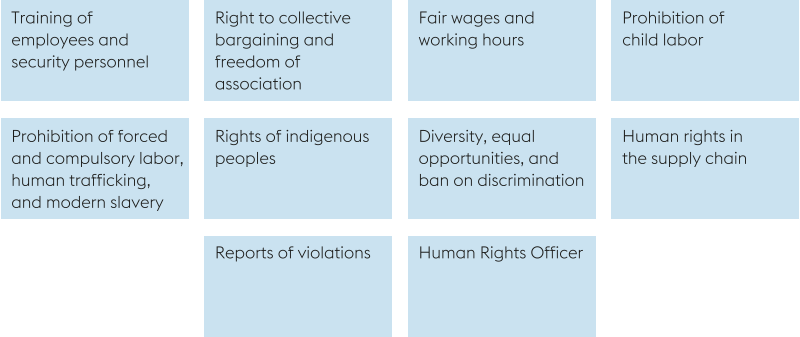
Internally, the Human Rights Policy is aimed at all Group companies. It therefore covers all voestalpine workers, who the company actively involves in the implementation of measures in relation to labor and human rights. The following points are of particular importance when it comes to employees:
Training on human rights
To raise awareness of human rights, an online training program was developed in cooperation with a renowned and independent non-university research institution for fundamental and human rights. For more information on human rights training, see chapter S1‑4.
Training of security staff
The security staff of the works security service consists predominantly of the company’s own employees, who are subject to the voestalpine Code of Conduct. The Code of Conduct for business partners applies to external security staff. Both documents mandate compliance with human rights. voestalpine provides human rights training for its own employees; external security personnel are trained by their own employers.
Collective bargaining and the right to freedom of association
voestalpine champions every employee’s freedom and their right to join unions. The majority of all the voestalpine Group’s employees are in an employment relationship that is governed by collective agreements or comparable industry-wide agreements. In addition, there is a European Works Council and a Group Works Council in place with an established basis for dialog with management (see chapter S1‑2).
Compensation and working hours
Working hours must comply with national legislation and prevent employees from experiencing excessive physical and mental fatigue. Employees must be entitled to at least one day off per week. Employees must be compensated in accordance with applicable legal regulations and collective agreements, and this compensation must be sufficient to meet the basic needs of both employees and their families and to provide them with a decent standard of living.
-
Employee-equitable organization of working hours
In accordance with the criteria of ResponsibleSteel (valid for the certified companies at the site in Linz), voestalpine attaches great importance to the employee-equitable organization of working hours which takes health and social interests into account to the greatest possible extent.
In line with the voestalpine Code of Conduct, clear guidelines are set for employee working hours, which comply with legal requirements and counteract excessive mental and physical fatigue of workers. For example, voestalpine is committed to complying with the statutory maximum working time limits and has an effective internal control system in place. When it comes to the organization of shifts, the protection of the health and social interests of our employees is a priority. New shift models are always introduced in consultation with the workers’ representatives. For example, as in the previous year, 61% of our blue-collar employees already work in shifts in part-time models, guaranteeing significantly longer blocks of time off between shifts than required by law.
When overtime is mandated, the interests of employees are also taken into account, including beyond the employees’ statutory rights of refusal. The right of employees to choose between overtime payment in the form of money or time off in lieu is not only guaranteed in the cases provided for by law, but also granted to employees beyond that, subject to operational feasibility. The organization of work at voestalpine ensures that the prescribed rest breaks are adhered to throughout, with the legal requirements applied as the minimum standard. This ensures employees are able to take meals and rest in all areas.
With regard to the granting of paid leave, the annual leave of three weeks required by ResponsibleSteel as a minimum standard is already exceeded by the provisions of the Austrian Leave Act (Urlaubsgesetz—UrlG), which stipulates minimum leave of at least five weeks. Additional days off work are granted at voestalpine both through collective agreements and internal company regulations.
Child labor, forced and compulsory labor, human trafficking, and modern slavery
voestalpine categorically rejects any form of child labor. Care is taken to ensure that the employment of young people does not jeopardize their health, safety, or development.
voestalpine does not tolerate any form of forced or compulsory labor, human trafficking, or modern slavery. This also includes the withholding of identification documents and passports, restrictions on the freedom of movement, and debt bondage. Both the voestalpine Code of Conduct and the company’s Code of Conduct for Business Partners explicitly mention and expressly prohibit human trafficking and modern slavery.
Diversity, equal opportunities, and ban on discrimination
voestalpine is committed to respecting all people irrespective of gender, skin color, nationality, ethnicity, religion or worldview, disability, age, sexual orientation, and identity. This commitment and corresponding actions promote a climate of acceptance, equal opportunity, and mutual trust. As laid out in the “Respect and Integrity” chapter of the voestalpine Code of Conduct, the Group does not tolerate any form of discrimination. The HR Strategy 2030+ also addresses discrimination and equal opportunity in its strategic spheres of action.
Reports of violations
Reports of human rights violations or breaches of the above-mentioned international guidelines can always be submitted in person to supervisors, the local or Group Human Resources departments of voestalpine AG, and the executive management. Violations can also be reported to the Human Rights Officer at the e-mail addresses humanrights@voestalpine.com and menschenrechte@voestalpine.com or anonymously using voestalpine’s online whistleblower system. This is available at https://www.bkms-system.net/voestalpine. Further information on the whistleblower system can be found in chapter G1‑1.)
Group health & safety policy and the safety code
Maintaining the health and safety of our workforce is a top priority at voestalpine and is firmly anchored in the company’s core values. voestalpine employees are exposed to occupational hazards and risks that can cause accidents, injury, illness, or disease due to the industry, the nature of their job, or the environment in which they work. Our goal is to ensure that no one in our workforce suffers work-related accidents or illnesses. To this end, we continuously assess the risks posed by employees’ activities, e.g., in handling machinery or hazardous materials, derive measures from this and train, sensitize, and empower our employees to counter the risks. More information can be found in chapter S1‑5. Protecting the health of the company’s own workforce is also a key element of the voestalpine sustainability and corporate strategies.
Group-wide health and safety management is undertaken by the Group health & safety Department, which is directly linked to a member of the Management Board. Led by the chief health & safety officer, the department coordinates Group-wide activities and supports cross-divisional cooperation. In close coordination with the health & safety Committee—a body comprising representatives from all four divisions and the Group Works Council—it develops and implements measures to continuously improve the culture of safety.
In the business year 2023/24, a Group-wide Safety Code was introduced. It supplements the Group’s health & safety Policy, which has been in place since 2021 and sets minimum standards applicable throughout the Group. The implementation of these standards is binding for all sites—regardless of local statutory requirements.
The Group-wide Safety Code forms an integral part of the measures taken to improve the culture of safety at all voestalpine companies. It is based on the principle that “safety is non-negotiable and takes precedence over quality and production”—for example, by systematically stopping production if conditions are unsafe. The code was drawn up by the health & safety Committee—consisting of divisional managers and members of the Works Council—under the leadership of the Chief health & safety Officer (CHSO). It was approved by the Group Management Board within the framework of the health & safety Board.
The code is implemented across the Group by the committee members responsible for the divisions, (technical) managing directors, and safety managers. Internal communication includes, for example, the initiative “Ja Sicher Lok” at the Linz site, targeted information for managers, and notebooks for shop floor employees and their supervisors. The Safety Code is available digitally on the intranet via the website “Corporate health & safety.”
Occupational safety management systems
Occupational safety management at voestalpine is based on the requirements of the internationally recognized ISO 45001 standard. The production companies run their own occupational safety management systems, but orient them on the Group-wide framework.
Each division has its own committees responsible for operational implementation. The committees are made up of (technical) executives, safety managers, and other divisional managers. Strategic management is carried out centrally in line with the existing board structure. Within the divisions, the respective management boards coordinate operational implementation to ensure effective and consistent application of the safety standards.
All voestalpine production sites have systematically integrated all relevant occupational safety requirements into their local processes.
Of the employees at key production sites, 89.3% are covered by certification according to ISO 45001 or an equivalent national standard.1 Implementation of measures is carried out by trained safety staff and occupational safety representatives, 80% of whom come from within the company. At smaller sites, their expertise is supplemented by external qualified workers where necessary.
In order to identify and introduce preventive measures to improve occupational safety, unsafe situations and near-misses are systematically documented and analyzed. A central web tool is used to document and assess the implementation of health and safety standards on an annual basis. The results are made available to select committees and incorporated into the continuous improvement process. In addition, regular internal and external audits are carried out to verify the effectiveness of the actions taken.
The relevant guidelines and documents are available throughout the Group on the intranet (“Corporate health & safety”) and on the voestalpine website. Senior executives and safety workers are regularly updated on the latest developments.
IROs addressed |
|
Policy |
|
Scope of the policy |
|
Responsibility and monitoring |
|
Other comments |
|
|
|
|
|
|
|
|
|
All IROs for S1 |
|
HR Strategy 2030+ |
|
Own operations |
|
HR Board |
|
|
Attractive working conditions |
|
Human Rights Policy |
|
Own operations |
|
Head of Group Sustainability |
|
|
Healthy and safe working conditions at voestalpine |
|
Group health & safety Policy and the Safety Code |
|
Own operations |
|
Management boards of the divisions |
|
|
Healthy and safe working conditions at voestalpine |
|
Occupational safety management systems |
|
Key production locations |
|
Divisional representatives in the health & safety Committee |
|
|
S1‑2 – Processes for engaging with own workers and workers’ representatives about impacts
voestalpine relies on the continuous dialog that it maintains with its employees and their representatives in order to systematically integrate their perspectives into business decisions. The responsibility for controlling these processes lies with the Group’s Human Resources Management in close cooperation with the respective managers. The exchange is based on established formats such as employee surveys, structured feedback discussions, and regular consultations with the Works Council at the local, divisional, and Group levels. Aspects such as diversity, inclusion, and equal opportunity are also taken into account in order to maximize the range of perspectives, including in particular those of potentially disadvantaged groups. The effectiveness of the engagement is continuously reviewed through response rates, benchmarks, and the implementation and impact of measures derived from the surveys.
Group-wide employee survey
At voestalpine, employees are regularly engaged in strategically relevant issues through a Group-wide survey, among other initiatives. Following the Group-wide employee survey in fall 2024, the participating companies launched the planned review process. This included analyzing the results and deriving suitable measures. By June 2025, a total of 208 companies had reported their prioritized measures in the Group-wide standardized reporting tool, which facilitates transparent communication by enabling data to be entered in English and providing full visibility across all units. Although each company was required to report only the two most important measures, some took the opportunity to list additional activities. A total of 450 measures were recorded—slightly more than after the 2022 survey.
In addition to the key engagement value, which describes the employees’ sense of connection to the company, the reported measures primarily concern the topics of appreciation, cooperation, and teamwork. The majority of the measures (81%) are ongoing and 82% relate to all employees (no distinction between white collar, blue collar, apprentices/trainees, etc.).
The results collected by the first reporting date were communicated to the Management Board of voestalpine in July 2025. The survey on the implementation status of the actions started in March 2026. In addition, the group-wide review process includes reporting to the respective supervisory and/or advisory boards as well as ongoing communication to the workforce.
The next voestalpine employee survey will take place in around 50 countries and 26 languages in fall 2026, and will be conducted jointly with an external partner.
Appraisal dialog
The appraisal dialog is a key employee development tool and an integral part of the voestalpine leadership culture. It facilitates a structured dialog between managers and employees, and creates a binding framework for feedback, development opportunities, and target agreements. Performance reviews are mandatory for all salaried employees (white collar workers) throughout the Group. For waged employees (blue collar workers), specific formats such as team member interviews are recommended but are not mandatory.
During the employee performance review, individual targets and associated actions as well as development measures are defined and documented in the employee performance review report. The agreements reached are then jointly reviewed at the next performance review. In the business year 2025/26, 34,904 (2024/25: 34,648) employee performance reviews were conducted across the Group, of which 19,456 (2024/25: 19,117) were with waged employees and 15,448 (2024/25: 15,531) with salaried employees.
Social dialog with workers’ representatives
The social dialog at voestalpine to engage with the company’s own workforce and their representatives forms a central part of the company’s philosophy and practice. voestalpine is committed to its responsibility to involve the Works Council in business decisions, especially with regard to issues that directly affect the interests of employees.
The legal framework for participation varies around the globe, resulting in different configurations of the works council structures in the countries and regions where voestalpine operates. Regardless of this, voestalpine AG pursues a consistent HR philosophy that aims to involve employees in projects and decisions to an appropriate extent. Depending on the situation and the occasion, voestalpine AG relies on established procedures for information, consultation, and participation:
- Information: proactively sharing relevant company information with the works council.
- Consultation: dialog and exchange of views with the works council, whereby the company listens to the council’s position but independently comes to a decision.
- Participation: decisions can only be made with the approval of the works council.
A regular exchange between the executive management, HR, and works council (if available) is recommended throughout the Group. Regular meetings (jour fixe) between management and workers’ representatives take place at the companies with works councils. The results of these meetings form the basis for operational decisions.
At Group level, the Steering Committee of the Group Works Council and the Group Management Board meet at regular intervals. Monthly meetings are also held between representatives of the Group Works Council and Group Human Resources management. They cover HR issues of strategic and cross-divisional importance at the meetings. In addition, regular exchanges take place at division level between divisional management, divisional HR and the respective works council.
The Group Works Council, as a statutory union of all the works council bodies of the voestalpine Group in Austria, represents the common economic, social, health, and cultural interests of the employees throughout the Group. Its highest governance body is the delegates’ conference, consisting of seconded members from the companies’ works councils. The delegates’ conference adopts the work program and guidelines for the steering committee, appoints representatives to the Supervisory Board of voestalpine, and nominates the Austrian delegates to the European Works Council. The steering committee manages the day-to-day business of the Group Works Council and conducts negotiations with Group Management.
The European Works Council is an information committee responsible for representing employees at the European level. Delegates from seven European countries meet roughly twice a year to discuss cross-border issues relating to the Group’s employee representation.
Workers’ representatives are provided with the necessary financial and human resources in line with the statutory regulations applicable in the respective countries. Aside from the existing institutional arrangements established at national and European level, there is currently no Group-wide framework agreement in place with workers’ representatives that applies to all sites worldwide. This also applies to agreements relating to respect for human rights in the working environment. However, voestalpine AG ensures that relevant national and international requirements are complied with in the respective countries and addressed within the framework of the existing participation structures.
Employee shareholding scheme
voestalpine AG has had an employee shareholding scheme since 2001, which has been continuously expanded since then. In addition to Austrian employees, employees in the United Kingdom, Germany, the Netherlands, Poland, Belgium, Czechia, Italy, Switzerland, Romania, Spain, and Sweden are also involved in the scheme.
The voting rights from the employee shares are bundled in the voestalpine Mitarbeiterbeteiligung Privatstiftung (employee foundation for the Group’s employee shareholding scheme), which makes it a stable core shareholder of voestalpine AG. As a central method for employee engagement, the employee shareholding scheme promotes long-term employee retention through active participation and giving them a say at the Annual General Meeting. As of March 31, 2026, a total of around 25,800 (2024/25: 26,600) employees held shares in voestalpine AG. They hold around 25.0 million (2024/25: 26.3 million) shares, which equates to 14.0% of the company’s share capital (2024/25: 14.7%) due to the general bundling of voting rights.
S1‑3 – Processes to remediate negative impacts and channels for own workers to raise concerns
voestalpine AG relies on a structured process to address and reduce material negative impacts to its own workforce. This includes collecting feedback from various sources, analyzing the results and implementing targeted remedies. It is based on a systematic approach that involves regular reviews as well as continuous feedback processes and clearly defined reporting channels. When material negative impacts are identified, targeted remedies adapted to specific needs are employed. These may include, among other things, training opportunities, psychosocial counseling, and adjusting working conditions. The effectiveness of these actions is continuously assessed through employee feedback, internal monitoring, and internal audits.
In addition to platforms such as the annual employee performance review and the follow-up process after the employee survey, other channels set up by voestalpine AG are available for the employees to express their concerns and have them examined:
1. Whistleblower system (https://www.bkms-system.net/voestalpine)
2. E-mail address of the Group’s Human Rights Officer (humanrights@voestalpine.com)
3. E-mail address of the central compliance contact point (group-compliance@voestalpine.com)
4. Getting into direct contact with voestalpine AG’s Group Human Resources
The bodies contacted look into the concerns raised, investigate any complaints, and inform the employees who have contacted them of any decisions or outcomes. Further information on the specific channels, their availability, and awareness of the structures within the workforce can be found in chapter G1‑1 in the section on the whistleblower system.
S1‑4 – Taking action on material impacts on own workforce, and approaches to mitigating material risks and pursuing material opportunities related to own workforce, and effectiveness of those actions
Targeted measures are implemented by voestalpine AG across the Group to manage material impacts on the workforce. These address both positive impacts—for example, by promoting diversity and development opportunities—and actual negative impacts—for example in the context of risks to the safety and health of employees. Actions taken are based on strategic concepts, coordinated across divisions, and continuously developed. They aim to create a secure framework, and identify and mitigate risks at an early stage.
In the voestalpine Group, suitable measures to prevent or mitigate negative impacts are generally selected on the basis of systematic risk analyses, internal evaluations, and feedback from relevant stakeholders, such as employees. The specific formulation of actions to be taken is adapted to the respective impact and the operational context. Depending on the subject area, different specialist departments, senior executives, workers’ representatives, or specialized committees are involved in the development and evaluation of possible action plans. The aim is to identify effective yet achievable solutions that are tailored to the identified risks. The prioritization of risks may be based on, for example, the magnitude of the actual impact, the affected group of workers, and the urgency of the situation.
The effectiveness of key actions is checked through various processes in the voestalpine Group. These include standardized evaluations, feedback instruments, monitoring data such as training participation, and site-specific audits and surveys (e.g., in the field of health & safety). Specific targets (e.g., proportion of women, accident metrics) are used as indicators. The findings from these review processes are fed into the further development of existing policies and actions.
The necessary funds and personnel resources for these actions are made available by voestalpine AG. Funding is allocated for impacts in the field of health and safety by the health & safety Board, and for HR-related impacts by the HR Board. The Group health & safety and HR departments are responsible for the development and implementation of the actions.
A description of the key spheres of action related to material impacts on voestalpine’s own workforce is provided below.
Diversity and equal opportunities
Targeted measures are implemented by voestalpine AG throughout the Group to strengthen equal opportunities and actively promote diversity in the long term. A core element of this approach is a comprehensive set of actions, which includes programs to promote women in the company, target group-specific employer branding, and actions to improve work-life balance. The following actions contribute to equal opportunities for all employees—an aspect that was found to be a material positive impact of voestalpine AG.
Female empowerment as a strategic sphere of action
An important building block for promoting diversity is the strategic sphere of action “Female Empowerment” included in the HR policy 2030+. The aim is to position voestalpine AG as an attractive employer for women—both among current and potential employees. In light of this, a Group-wide target for increasing the proportion of women has been set. voestalpine has set itself the goal of increasing the proportion of women in management positions from 14% to 18% by 2030. See S1‑5 for more information.
Since the business year 2024/25, the Human Resources and Organizational Development competence team has taken over the Group-wide coordination of initiatives and measures for female empowerment. In relation hereto, a sub-competence team containing representatives from all divisions and various professions specifically addresses the topic of female empowerment twice a year. This team discusses action plans—both planned and already implemented—and reflects on Group-wide topics. On the one hand, this supports independent follow-up on the topics in the organizational units; on the other hand, it facilitates Group-wide coordination, for example with regard to resources and strategic orientation.
The following aspects constitute the most important actions in the three defined spheres of action:
1. Positioning
Actions for positioning include target group-specific marketing, positioning, and recruiting, initiatives for early outreach—for example partnerships with schools and sports associations, cooperation with the labor market service to address women in a targeted manner, and target group-specific apprenticeship marketing—childcare facilities offering up to 24/7 care at the Linz site, certifications such as the Austrian “equalitA seal of quality,” and representation at specific events such as the Female Empowerment Festival “Let’s get visible” in Linz.
2. Retaining
The actions to retain female employees include the expansion of flexible working time models, the international rollout of an internal e-learning course on mutual respect, workshops to raise awareness, the use of gender-sensitive language, a dedicated female empowerment section in the Group-wide intranet, and a newsletter that focuses on women at voestalpine AG, the expansion of childcare facilities, and the establishment and expansion of women’s networks.
3. Guiding, supporting, empowering
Actions on this topic include establishing female empowerment as a fixed element of the Austrian education program, ensuring women represent at least 20% of the participants women in the internal management training program value:program, female empowerment as a focus in management training programs, a mentoring program for women who show potential, measures to cushion the career break after maternity leave—including specific part-time models—and an increased focus on female high-potential employees in succession planning.
Training on human rights
As part of its human rights due diligence obligations, voestalpine provides mandatory e-learning courses for employees and additional training for safety staff. The aim behind this is to raise awareness of human rights issues and identify potential risks at an early stage. Training is carried out by the respective Group companies and is supported by ongoing monitoring of participation rates and training volumes.
It is aimed at all employees with access to e-learning courses and is available in 14 languages. The training program provides information and guidance on human rights compliance and includes three mandatory modules on the following topics:
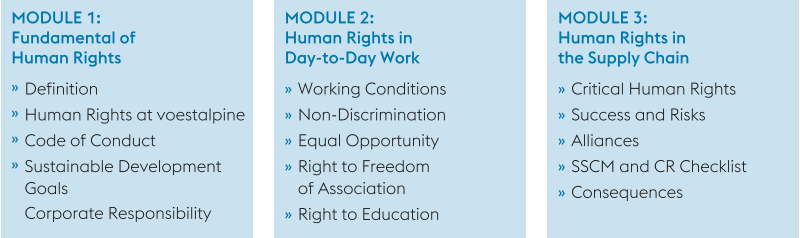
At the end of the 2025/26 business year, 96% (2024/25: 92%) of the assigned human rights training courses were successfully completed.
Personal development and training
voestalpine AG undertakes to continuously develop its training and education in order to adapt the skills of its employees to current and future requirements. This is also anchored in the fields of action of the HR Strategy 2030+. The following measures, tailored to various target groups, contribute to the personal development and training of employees—an aspect that has been assessed as a material positive impact of voestalpine AG—as well as to the achievement of the objectives of the HR Strategy 2030+. The programs are group-specific and support employees as they progress through different career and development phases.
In the business year 2025/26, Group-wide expenses for personnel development amounted to more than EUR 74 million (2024/25: EUR 76 million). 85.0% (2024/25: 84.7%) of all employees (excluding apprentices) took part in training and further education measures. The total volume of training was 793,101 hours (2024/25: 839,068 hours), which equates to an average of 20.1 hours per participant (2024/25: 20.8 hours per participant).
voestalpine coaching
Coaching is an integral part of employee development at the Group. The online platform voestalpine COACHING allows voestalpine employees to individually arrange coaching sessions worldwide. These sessions provide professional support for personal transformations in a professional context.
Management training program – “value:program”
In the business year 2025/26, voestalpine continued to rely on its Group-wide value:program to train current and future managers. The multi-stage program combines training, project work, and international, cross-departmental exchange with the involvement of senior executives and members of the Management Board. For quality assurance purposes, all modules are evaluated after completion. Feedback from the participants, the latest developments, and company-wide values are used to further develop the content as required. In the business year 2025/26, 193 employees from 24 countries took part; of these, 30.1% were women.
Regional programs
-
Talent Road China
Talent Road China is a regional development program for high-potential employees and senior executives at voestalpine in China and combines classroom modules with online training. The sixth program was completed in June 2025 with 40 participants; the next one will start in October 2026.
-
Get Connected Program North America
The Get Connected Program North America is geared towards young talent and future senior executives in Canada, Mexico, and the USA, and combines classroom training with online modules. In the 2025/26 business year, 26 participants completed the current round; another started in January 2026.
Specialist programs
-
HR academy
The HR academy is a Group-wide training program for voestalpine HR professionals. It is aimed at HR generalists and specialists who want to improve their competencies in HR management in the Group. The program consists of three modules. The sixth academy kicked off in February 2025 with the first module; two more will follow in the business year 2025/26.
-
purchasing power academy
The purchasing power academy is a group-wide training program for buyers and comprises two levels of competence as well as complementary lifelong learning. Digital learning formats are combined with classroom seminars and certifications and are continuously being enhanced.
Apprentices/trainees
As of the annual reporting date (March 31, 2026), the voestalpine Group was training 1,526 apprentices (2024/25: 1,574 apprentices) in about 50 skilled trades, the majority thereof (66.3%) (2024/25: 68%) at locations in Austria. A total of 15.6% of apprentices were being trained in Germany under the dual system applicable in that country (2024/25: 14%). Because apprenticeships are based on defined requirements, almost all of the apprentices who successfully complete their training are offered an employment contract. voestalpine clearly believes that it has the duty to invest in the training of young, skilled workers. In addition to excellent professional training, attention is also paid to developing personal and social skills. On average, the Group invests EUR 106,000 in training each apprentice (2024/25: EUR 100,000).
The company will offer some 440 trainee slots (2024/25: 500) in the next training year (starting in September 2026) in Austria, Germany, and Switzerland. To give interested young people insights into the vocational training programs on offer at voestalpine, open house days are held at various training locations, designed in a way that targets the specific audience with the involvement of apprentices. One particular aim is to get girls interested in technical professions. The proportion of women in technical apprenticeships has increased by roughly 25% in the past 10 years and currently stands at 13.5% (2024/25: 17.8%). Intensive measures such as participation in careers fairs and visits to schools as well as Girls’ Day are undertaken to further increase the proportion of women in technical apprenticeships in particular.
The international success of voestalpine apprentices confirms the quality of their training, such as the silver medal in the electrical systems category at the EuroSkills Professional Championship in Herning, Denmark, in September 2025. voestalpine apprentices have also been successful in Austria: winning awards such as the “Stars of Styria” and the Upper Austrian Apprentice Award places them firmly among the region’s top experts.
In addition to their everyday training, apprentices at voestalpine are encouraged and challenged in terms of self-development and personal growth. Examples include team-building seminars, stints of employment abroad, or language trips. The importance of solidarity and social engagement is another focus point, for example, through participation in the 3-Bridges Run in Linz, where an apprentice team consisting of around 170 apprentices and their trainers collected points (“cares”) during the voestalpine cares runs, helping those in need. For more information on the voestalpine cares run, see chapter S3‑4.
Through a variety of actions taken, voestalpine AG underscores the importance of vocational training and demonstrates how apprenticeship programs can be set up in line with a forward-thinking approach, such as with solutions like the voestalpine BÖHLER CAMPUS, which officially opened in November 2025 and has offered housing for over 30 apprentices for the duration of their training since September 2025. Platforms such as the “Digital Miniature Factory” promote digital skills: In a two-week training project, apprentices develop a functioning miniature production plant and implement real production processes on a small scale.
-
Apprentice advertising campaign #FavoriteMoments
In 2025, voestalpine once again launched its apprenticeship campaign under the umbrella of its brand campaign, which specifically addresses the needs of young people. The campaign showcases the real “favorite moments of apprentices” at voestalpine. It highlights aspects such as team spirit and culture, practice, good compensation, diversity, and quality of education.
The aim of the cross-media campaign is to use the apprentices’ #FavoriteMoments to make voestalpine tangible as an employer. Apprentices from voestalpine act as ambassadors and provide authentic insights into their training. In formats such as word raps, apprenticeship presentations, or short videos with reference to the campaign song “All these Moments,” the apprentices provide insights into their everyday lives and many other highlights of an apprenticeship at voestalpine. The campaign employs a wide range of communication channels, such as the Group’s own corporate apprenticeship website (https://www.voestalpine.com/lehre), social media, print media, and internal channels to reach young people, their parents, and teachers. TikTok and Snapchat are increasingly being used to address the youngest target group.
-
Group Apprentice Day
The Group Apprentice Day is a special experience during the apprenticeship: In the program’s final year, all apprentices are invited to the Group’s headquarters in Linz to spend an eventful day that includes a talk with Management Board members, a tour of the plant, team challenges, along with a lot of other fun and action. Almost 400 apprentices and trainees from 40 sites in Austria, Germany, and Switzerland took the opportunity to meet in person and get to know the Group headquarters in Linz at the voestalpine Group Apprentice Day on October 21, 2025.
Under the guiding principle of the apprentice advertising campaign #FavoriteMoments, the day was all about unforgettable experiences. At the talk with members of the Management Board, apprentices from different sites shared their personal #FavoriteMoments—from language trips to internships abroad. The program also included a lecture by EU Youth Ambassador Ali Mahlodji, a tour of the plant in Linz, as well as team challenges. The day concluded by awarding the winner of the photo contest with the most beautiful #FavoriteMoments: An image that shows how colleagues have become friends.
health & safety
In its HR Strategy 2030+, voestalpine undertakes to continuously develop measures to promote employee health and improve occupational safety in order to increase job satisfaction while simultaneously reducing time off due to sickness, accidents, and work-related ill health.
A variety of activities were initiated to support this sphere of action and reflect the importance of this critical success factor.
The voestalpine health & safety calendar 2026, for example, accompanies us throughout the year, focuses on relevant topics on a monthly basis, and promotes discussion on the subject of occupational safety. Insights from safety flashes complement this dialog by analyzing serious incidents across sites and making learning opportunities visible.
voestalpine wants to convey to all employees the importance of identifying risks at an early stage and consistently avoiding risks. The “red lines” set clear boundaries for activities with potentially life-threatening consequences, and are taught as part of a multilingual e-learning course. In addition, the initiative #safetystartswithme in the Metal Forming Division reflects our practice of personal responsibility, intervening when necessary, and the mindset that safety begins with each and every individual.
Uddeholm, one of the High Performance Metals sites, also consistently pursues the goal of zero accidents. More than 6,000 risk assessments, regular safety rounds, and a strong reporting system support the early identification of risks. Training, open communication, and the continuous development of the safety culture are essential building blocks in this regard.
In 2026, the Metal Engineering Division is launching the campaign “Decide now, avoid accidents” to raise employee awareness of near misses so that they can react correctly and avoid risks before they result in serious accidents.
Responsibility for implementation and monitoring the campaign lies with the health & safety Department and with the local safety managers in coordination with local executive management. The engagement and participation of workers’ representatives and the health and safety committee ensure practical and effective action that is geared toward specific operational requirements is pursued. The company ensures the necessary financial and human resources are provided in an appropriate form.
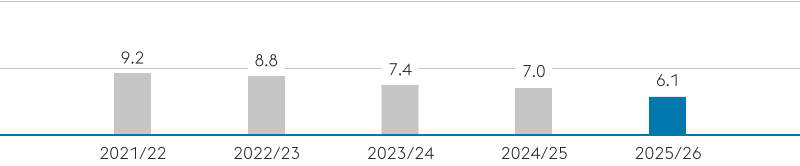
In recent years, the number of occupational accidents across the Group has been significantly reduced. This is also reflected in the Group-wide target “reduce the frequency of accidents.” For more information, see chapter S1‑5. This decline is the result of consistent and structured health and safety actions that have been effectively rolled out in the divisions.
In addition, occupational accidents are systematically analyzed to identify their causes and contributing factors. Based on this, we derive targeted prevention measures and consistently implement them. Where relevant, findings from accidents are communicated across sites in order to avoid similar incidents in the long term.
The companies have a wide range of support tools at their disposal. The specific selection and implementation of actions is carried out for each site by the respective divisional companies in close coordination with the responsible safety managers.
health & safety training
voestalpine AG companies regularly hold safety meetings with all of their employees. Monthly discussions between master craftspeople and staff, as well as the 15-minute safety training by safety staff and safety representatives, provide key formats for communicating occupational safety measures. Workers’ representatives are also actively involved in this process in order to jointly develop actions to improve safety.
Additionally, quarterly safety inspections are conducted by executive management, with one inspection each year being carried out with the involvement of Management Board members. All employees are required to complete an online training course on health and safety that conveys the safety values and standards of voestalpine AG and supplements the classroom-based training. Targeted training courses for management and master craftspeople are also held. Mandatory participation in safety training courses is documented and tracked.
IROs addressed |
|
Action |
|
Time horizon |
|
Scope of the action |
|
Significant expenditure (if relevant)/other comments |
|
|
|
|
|
|
|
|
|
Equal opportunities for all employees |
|
“Diversity and equal opportunities” set of actions |
|
Implementation of the set of actions by the end of 2026 at the latest |
|
Own operations |
|
Some actions already implemented |
Attractive working conditions |
|
Training on human rights |
|
Current actions |
|
Own operations |
|
– |
Personal development and training |
|
“Personal development and training” set of actions |
|
Current actions |
|
Own operations |
|
Yes, OpEx |
Healthy and safe working conditions at voestalpine |
|
“health & safety” set of actions |
|
Dependent on actions taken |
|
Own operations |
|
Consideration of the interests of safety managers and workers’ representatives |
Metrics and targets
S1‑5 – Targets related to managing material negative impacts, advancing positive impacts, and managing material risks and opportunities
Target: to increase the proportion of women
As part of the HR Strategy 2030+ strategic sphere of action “Female empowerment,” voestalpine aims to position itself as an attractive employer for women—both for current and potential employees. Female empowerment contributes to diversity in decision-making positions, increasing employee engagement, and promoting a positive corporate culture. The aim is to measure and strengthen the positive impacts identified for “equal opportunity for all employees.”
A gender-balanced approach at the company counteracts social inequalities and strengthens the right to fair participation in working life—a fundamental principle of sustainable development. By aiming to increase the proportion of women—especially in leadership positions—voestalpine AG is strengthening human rights principles.
Equal opportunity in the world of work is one of the internationally recognized human rights, in particular the ILO core labor standards. voestalpine AG also supports the UN sustainability goal SDG 5. In particular, the focus is on sub-objective 5.5, which entails “ensuring that women are equally involved at all levels of decision-making.” This SDG objective is also anchored in the European Union’s strategic frameworks—including the EU Green Deal and the EU Sustainable Finance Agenda. voestalpine contributes to the implementation of these European objectives and to the EU Gender Equality Strategy, which aims to achieve a gender-equitable Europe.
A higher proportion of women further strengthens the competitiveness and sustainability of the company. Diverse teams have been found to be more resilient, innovative, and decisive, which represent key advantages for the management of complex industrial structures. Targeted support for women in underrepresented areas also unlocks previously untapped talent potential and helps to overcome the shortage of skilled workers.
At the same time, a visible commitment to equal opportunity increases employer attractiveness—especially among younger generations—and fosters a cultural shift toward an inclusive, modern corporate culture.
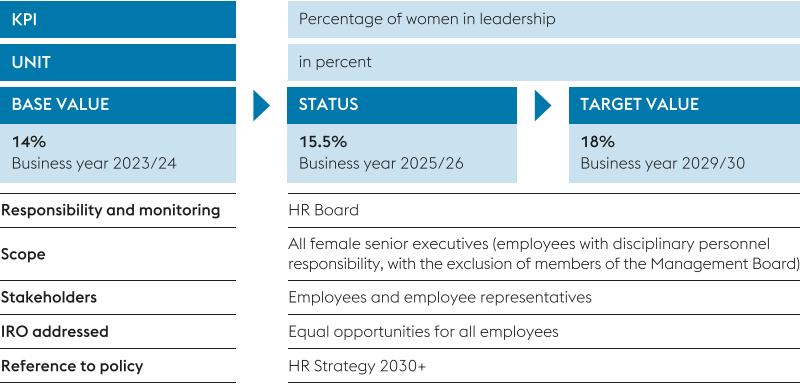
In concrete terms, the undertaking strives to increase the proportion of women at all qualification levels throughout the Group. In particular, the proportion of female senior executives is to be increased from 14% (business year 2023/24) to 18% by 2030. Senior executives are defined as employees with disciplinary personnel responsibility, with the exclusion of board members. This target is based on an evaluation of the previous development and the current gender distribution in the Group.
HR objectives in relation to the topic of female empowerment are defined as part of a participatory process with the engagement of employee representatives. This includes regular employee surveys, stakeholder communication, topic-specific working groups and regular committees with the division HR managers. The aim is to take different points of view into account and to ensure the relevance and feasibility of the objectives.
Implementation and target achievement are monitored through periodic reviews and evaluations based on quantitative and qualitative indicators. In addition, feedback tools such as employee surveys and joint review sessions with the workforce are used to gain additional knowledge and derive measures as necessary. This approach strengthens the Group’s commitment to diversity and inclusion, and promotes an open and collaborative corporate culture.
The goal to increase the proportion of women in management positions is anchored in voestalpine’s corporate governance. It is monitored and evaluated as part of the ongoing management processes and, where necessary, further enhanced by actions and initiatives.
As of March 31, 2026, the total proportion of women in the voestalpine Group was 16.6% (2024/25: 16.4%). The percentage of female workers among waged employees was 7.3% (2024/25: 7.3%); among salaried employees it was 30.1% (2024/25: 29.9%). The proportion of female senior executives was 15.x5% (2024/25: 14.4%). In all categories, there was a slight increase compared with the previous year.
Target: reduce the frequency of accidents
This target has been set on the basis of the international standard ISO 45001, as well as national and European targets for occupational health and safety. In particular, voestalpine AG takes into account the objectives of the EU Strategic Framework on Health and Safety at Work 2021–2027, which, among other aspects, pursues the guiding principle of “Vision Zero”—i.e., zero fatalities due to occupational accidents. The objective is to systematically reduce work-related health risks and to adjust the level of safety in line with internationally recognized standards throughout the Group. The health & safety Committee, consisting of the respective representatives of the divisions and workers’ representatives, sets the Group’s targets, which are ultimately approved by health & safety Board.
Implementation and target achievement are ensured by periodic reviews and evaluations as part of the quarterly health & safety Committee meetings or the semi-annual health & safety Board meetings.
The Lost Time Injury Frequency Rate (LTIFR) indicates the frequency of accidents based on the number of recordable workplace accidents entailing more than three sick days per one million hours worked. To ensure uniform comparability, the definitions of recordable accidents, days lost, and hours worked have been standardized across the Group—especially in light of the differing national regulations.
Reducing the frequency of accidents contributes significantly to sustainable development, as safe working conditions represent a key element of decent working (SDG 8 “Decent Working and Economic Growth”) and ensure the long-term viability and health of employees.
For employees, this means a lower risk of injury and an overall safer and healthier working environment. For the company, the systematic prevention of occupational accidents increases operational stability, reduces downtime, and enhances employer attractiveness—especially in safety-critical work areas.
In relation to health and safety, voestalpine aims to reduce the accident rate to the target value of 5.5 by the end of the business year 2029/30.
The Group health & safety Department reviews this target within the scope of Group-wide reporting and control processes.
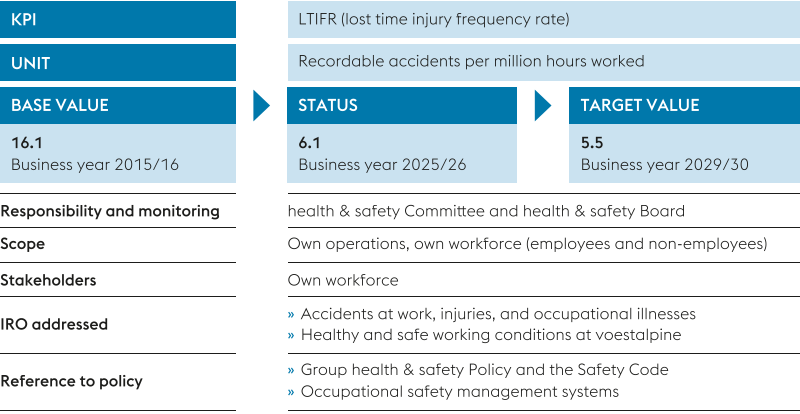
In the context of the IROs “attractive working conditions” and “personal development and training”, there are no Group-wide, time-limited and specific outcome-oriented targets in place related to voestalpine’s own workforce. This is due to the fact that the structure and management in these areas is predominantly decentralized and corresponding targets are also set at this level.
S1‑6 – Characteristics of the undertaking’s employees
The following information is presented based on head count. The number of persons represents the total of waged and salaried employees, with both fixed-term and permanent contracts, including the number of apprentices. Together, these employee groups form the number of employees. No employees with zero hours contract are employed by the Group.
Unless otherwise stated, the following metrics refer to the reporting date of March 31, 2026.
As of the reporting date (March 31, 2026), the voestalpine Group had a global workforce of 48,010 employees (including apprentices). Of these, 1,526 apprentices were receiving training at the voestalpine Group as of March 31, 2026, a slight decrease of 3.0%, or 48 apprentices over the previous year (2024/25: 1,574). 6,524 or 13.6% of employees had a fixed-term contract (2024/25: 6,854). Overall, the number of employees fell by 1,288 or 2.6% compared with the previous year.
In the Annual Report, the information according to S1‑6 is presented in Note D.28. Information on employees in the notes to the Consolidated Financial Statements.
Number of persons in countries with companies with >50 employees and >10% of the Group workforce, as of the March 31 reporting date |
|||||||||||
Gender |
|
Austria |
|
Germany |
|||||||
|
|
2024/25 |
|
2025/26 |
|
2024/25 |
|
2025/26 |
|||
|
|
|
|
|
|
|
|
|
|||
Male |
|
20,520 |
|
20,264 |
|
5,297 |
|
4,925 |
|||
Female |
|
3,803 |
|
3,775 |
|
1,109 |
|
1,014 |
|||
Other |
|
0 |
|
0 |
|
0 |
|
0 |
|||
Not specified1 |
|
– |
|
0 |
|
– |
|
0 |
|||
Total Employees |
|
24,323 |
|
24,039 |
|
6,406 |
|
5,939 |
|||
|
|
|
|
|
|
|
|
|
|||
|
|||||||||||
As of the March 31 reporting date |
|
Female |
|
Male |
|
Other |
|
Not specified1 |
|
Overall |
|||
|
|
|
|
|
|
|
|
|
|
|
|||
2024/25 |
|
|
|
|
|
|
|
|
|
|
|||
Employees |
|
8,184 |
|
41,114 |
|
0 |
|
– |
|
49,298 |
|||
Number of permanent employees |
|
6,926 |
|
35,518 |
|
0 |
|
– |
|
42,444 |
|||
Number of temporary employees |
|
1,258 |
|
5,596 |
|
0 |
|
– |
|
6,854 |
|||
Number of non-guaranteed hours employees |
|
0 |
|
0 |
|
0 |
|
– |
|
0 |
|||
|
|
|
|
|
|
|
|
|
|
|
|||
2025/26 |
|
|
|
|
|
|
|
|
|
|
|||
Employees |
|
8,000 |
|
40,006 |
|
0 |
|
4 |
|
48,010 |
|||
Number of permanent employees |
|
6,816 |
|
34,666 |
|
0 |
|
4 |
|
41,486 |
|||
Number of temporary employees |
|
1,184 |
|
5,340 |
|
0 |
|
0 |
|
6,524 |
|||
Number of non-guaranteed hours employees |
|
0 |
|
0 |
|
0 |
|
0 |
|
0 |
|||
|
|
|
|
|
|
|
|
|
|
|
|||
|
|||||||||||||
Numerous measures in the voestalpine Group aim to make the best possible use of the knowledge and experience of the employees and to increase their job satisfaction. This also helps to keep the fluctuation rate as low as possible. Based on the total number of employees employed as of the reporting date (excluding apprentices), which amounted to 46,484, the turnover rate for employment contracts terminated by mutual consent or by employees was 7.5% in the business year 2025/26 (2024/25: 7.8%). A total of 5,622 employees (excluding apprentices) left the company (e.g., due to resignation, unrenewed expiring fixed-term contracts, retirement, death), which is 45 more employees year over year (2024/25: 5,577). This corresponds to an overall turnover rate of 12.1%, which is 0.4 percentage points higher than in the previous year (2024/25: 11.7%) (see Note D.28. Employee information in the notes to the Consolidated Financial Statements).
S1‑8 – Collective bargaining coverage and social dialogue
voestalpine AG is committed to freedom of association and right of its employees to organize themselves in a union. Trade unions represent the interests of employees and negotiate with the employer to achieve fair working conditions, in particular in the form of wages, salaries, working hours, and leave entitlements, which are set down in writing in collective agreements. They may vary from country to country. As of the reporting date for 2025/26, 36,959 employees (including apprentices) in the voestalpine Group, i.e., 77.0%, were covered by a collective agreement (2024/25: 38,378 employees, or 77.8%). For companies in the EEA area, the coverage rate was 87.7% and 32,753 (2024/25: 33,839 and 88.7%) for a total of 37,350 employees (including apprentices). At 96.9% coverage in Austria (2024/25: 98.8%) and 64.9% in Germany (2024/25: 65.4%), a significant number of employees in the Group are covered by collective agreements.
In many voestalpine Group companies, a works council represents employee interests alongside collective agreements. Austria and Germany are particularly significant in this regard, with 29,978 (62.4%) of the Group’s 48,010 employees around the globe coming from these two countries. Of these, as in the previous year, 98.6% of employees in Austria and 88.1% in Germany are represented by a works council.
As of the March 31 reporting date, no changes from the previous year |
|||||||||||||
2025/26 |
|
Collective bargaining coverage for employees |
|
Social dialogue |
|||||||||
|
|
Employees—EEA1 |
|
Employees—Non-EEA2 |
|
Workplace Representation (EEA only3) |
|||||||
|
|
|
|
|
|
|
|||||||
Coverage Rate |
|
|
|
|
|
|
|||||||
0–59% |
|
|
|
|
|
|
|||||||
60–79% |
|
Germany |
|
|
|
|
|||||||
80–100% |
|
Austria |
|
|
|
Germany, Austria |
|||||||
|
|
|
|
|
|
|
|||||||
|
|||||||||||||
S1‑9 – Diversity metrics
Top management
The top management of the voestalpine Group (headquartered in Linz) comprises the Management Board of voestalpine AG and executive management of the divisional subsidiaries. At the end of the reporting year, the proportion of women in top management was 11.1%.
Age structure in the Group
A balanced age structure helps ensure the transfer of knowledge, make age-related departures predictable, and avoid staff shortages. It makes it easier to replace employees entering retirement in a timely manner. To achieve this, employees need to feel loyal to voestalpine and be retained in the long term. As of March 31, 2026, the average age of employees in the voestalpine Group—excluding apprentices—was 42.2 years old (2024/25: 41.7 years old).
The following table shows the age distribution of the workforce (excluding apprentices):
|
|
Number |
|
Percentage |
||||
|
|
2024/25 |
|
2025/26 |
|
2024/25 |
|
2025/26 |
|
|
|
|
|
|
|
|
|
Under 30 years old |
|
8,795 |
|
8,204 |
|
18.4% |
|
17.6% |
30 to 50 years old |
|
26,517 |
|
25,981 |
|
55.6% |
|
55.9% |
Over 50 years old |
|
12,412 |
|
12,299 |
|
26.0% |
|
26.5% |
S1‑10 – Adequate wages
voestalpine upholds minimum social standards throughout the Group with its Code of Conduct. Chapter 5, Social Responsibility, states the following obligation under the heading “Compensation”: “employees must be compensated in accordance with applicable legal regulations and collective agreements, and this compensation must be sufficient to meet the basic needs of both employees and their families and to provide them with a decent standard of living.”
This requirement must be implemented in every Group company. The respective executive management verifies compliance with the code every two years with their signatures. As of the business year 2025/26, companies will be required to undergo spot checks to review compliance.
The spot check was undertaken at 32 voestalpine companies which had stated that their employees were not covered by a collective agreement. The answers were collected in the form of an electronic questionnaire. The questions related to compliance with minimum legal standards or, in the absence of legal regulations, to other national or international benchmarks. If there was no regulated benchmark, companies were required to apply the minimum wage per hour according to the Wage Indicator as a benchmark.
In all countries of the companies audited, remuneration is regulated by law. The audit found that no employees of the companies concerned are remunerated below the legally established minimum standard.
S1‑14 – health & safety metrics
The following quantitative information on occupational health and safety relates exclusively to employees of the voestalpine Group. In accordance with the ESRS transitional provisions, information on non-employee workers is not yet reported.
In the business year 2025/26, 507 (2024/25: 597) recordable workplace accidents were recorded in the voestalpine Group. The Lost Time Injury Frequency Rate (LTIFR), which is calculated uniformly across the Group, indicates the number of recordable workplace accidents entailing more than three sick days per one million hours of work performed. This amounted to 6.1 in the reporting year (2024/25: 7.0). Unfortunately, there was also one fatal accident involving a voestalpine employee (2024/25: two).
Near misses are also systematically recorded as part of a Group-wide health & safety web tool. Actions to improve the situation are defined on the basis of the review of incident reports and documented if necessary.
Thanks to consistent health and safety measures across all divisions, the number of workplace accidents has been significantly reduced in recent years. Ongoing classroom training at all sites contributed to the further reduction in the frequency of accidents in the business year 2025/26.
The LTIFR metric is documented on a Group-wide basis and evaluated using an internal system.
As of the March 31 reporting date
S1‑16 – Remuneration metrics (pay gap and total remuneration)
In order to determine the income gap between men and women in the Group, the gender pay gap was calculated on the basis of annual total remuneration (fixed and variable components as well as benefits in kind), target hours, and overtime paid. Target hours may take into account the available capacity of part-time workers. To ensure valid comparability, the members of the Management Board were not included in the calculation as they are not considered employees.
Apprentices are not included in the calculation either. Apprentice wages are a training allowance that is based on the progress made in the apprenticeship and not on actual work performance or market value. At voestalpine, the amount of an apprentice’s wage depends exclusively on the applicable collective agreements and is not freely agreed between apprentices and the company. Neither the gender nor the working hours of apprentices have any influence on the pay structure. The data reported by the companies was first recorded in the domestic currency at the individual level and then converted to euros for the purpose of comparability. In the voestalpine Group, the gender pay gap (excluding the Management Board) came to 15.2%; a slight rise of 1.7 percentage points over the previous year2 (13.5%.) The disparity can be explained partly by the different fields of activity (service sector, production companies, etc.), a slight reduction in predominantly male production roles, and severance payments for male retirees from the baby boom generation.
The ratio of the median annual total remuneration of all employees (excluding the Management Board) compared to the highest earner came to 1:63.9 in the business year 2025/26 (2024/25: 1:64.2).
In addition to the fixed gross salary, variable salary components, and the values of benefits in kind (company car; company apartment, voluntary insurance) are also included in the total remuneration. The Group median was calculated using a statistical approximation method, as system limitations mean that only aggregated remuneration data are available for foreign subsidiaries, whereas complete individual data are available for Austria. The approximation is based on country-specific weighting factors taking into account comparable salary levels. A subsequent plausibility check confirmed only minor, economically insignificant variances.
S1‑17 – Incidents, complaints, and severe human rights impacts
Compliance and human rights violations can be reported using various internal and central reporting points such as the whistleblower system. Whistleblowers can choose whether or not to state their name. For more detailed information on the channels through which concerns can be expressed, see chapters S1‑3 and G1‑1.
In the business year 2025/26, 50 reports were received through the established reporting channels (2024/25: 24). Of these, 34 cases were reported through the whistleblower system and 16 by e-mail. Each case was assessed and dealt with. The outcome of two cases is still pending. Of the 48 categorized cases, 13 (2024/25: 7) can be classified as discrimination in the form of harassment, micromanagement, and non-inclusion. 10 reports concern lack of appreciation and three cases concern violations of labor law. Four cases concern possible private sector misconduct by employees and 18 cases concern general complaints. Two years ago, legal proceedings were initiated in one case of dismissal and are still pending. None of the 50 reports received involved any form of human rights violations. In the business year 2025/26, as in the previous year, no fines or compensation payments were made on the basis of human rights violations.
ESRS disclosure requirement |
|
Paragraph |
|
Datapoint/metric |
|
Basis for the preparation and description of the assumptions and methodology |
|
Information on sources of a high level of measurement uncertainty and information on measurement |
|
|
|
|
|
|
|
|
|
S1‑6 – Characteristics of the undertaking’s employees |
|
50a |
|
Employees by gender |
|
Number of own staff (headcount) by gender, including apprentices and non-guaranteed hours employees, excluding interns (during summer breaks or as part of school programs), freelance contractors, diploma students/PhD students |
|
Limited—data represents the individual companies |
S1‑6 – Characteristics of the undertaking’s employees |
|
50a |
|
Employees by country |
|
Number of own staff (headcount) by country, including apprentices and non-guaranteed hours employees, excluding interns (during summer breaks or as part of school programs), freelance contractors, diploma students/PhD students. Only Germany and Austria included |
|
Limited—data represents the individual companies |
S1‑6 – Characteristics of the undertaking’s employees |
|
50b |
|
Employees by type of contract and gender |
|
Distinction between permanent contracts, fixed-term contracts, and non-guaranteed hours employees (e.g., casual workers, zero hours contracts) |
|
Limited—data represents the individual companies |
S1‑6 – Characteristics of the undertaking’s employees |
|
50c |
|
The total number of employees who have left the undertaking and the rate of employee turnover |
|
Total number of own staff (excluding apprentices) who left the company voluntarily (termination by employee), by mutual agreement, as a result of termination by the employer, retirement, due to occupational disability, or death (excluding transfers to another voestalpine company). Average annual values as of March 31 of the previous year + March 31 of the current business year |
|
Limited—data represents the individual companies |
S1‑8 – Collective bargaining coverage and social dialogue |
|
60a |
|
Collective bargaining coverage for employees |
|
Collective agreement coverage in percent = number of employees covered by a collective agreement (headcount)/total number of employees (headcount). Collective agreements are defined as “any written agreement on terms and conditions of employment concluded between an employer, a group of employers, or one or more employer organizations on the one hand, and one or more representative employee organizations (trade unions) on the other hand” |
|
Limited—data represents the individual companies |
S1‑8 – Collective bargaining coverage and social dialogue |
|
60b |
|
Collective bargaining coverage on a country-by-country basis (EEA countries) |
|
The disclosure requirements on collective agreements in the European Economic Area concern only the voestalpine companies in Austria and Germany, since only in these countries are the thresholds according to ESRS S1‑8 (at least 50 employees and at the same time at least 10% of the total workforce) achieved |
|
Limited—data represents the individual companies |
S1‑8 – Collective bargaining coverage and social dialogue |
|
63a |
|
Coverage by worker’s representatives on a country-by-country basis |
|
Workers’ representatives refer to |
|
Limited—data represents the individual companies |
S1‑9 – Diversity metrics |
|
66a |
|
Gender distribution at the top management level |
|
The top management level is defined as the Management Board of voestalpine AG and the executive management of the divisions’ lead companies |
|
Limited—data represents the individual companies |
S1‑9 – Diversity metrics |
|
66b |
|
Age structure of employees |
|
Total own workforce as of March 31 (excluding apprentices), divided into age groups: |
|
Limited—data represents the individual companies |
ESRS S1‑10 – Adequate wages |
|
70 |
|
If not all its employees are paid an adequate wage in line with applicable benchmarks, the undertaking must disclose the countries where employees earn below the applicable adequate wage benchmark and the percentage of employees that earn below the applicable adequate wage benchmark for each of these countries |
|
In accordance with the Code of Conduct of voestalpine, chapter 5 “Social Responsibility” states the following obligation under the heading “Compensation”: employees must be compensated in accordance with applicable legal regulations and collective agreements, and this compensation must be sufficient to meet the basic needs of both employees and their families and to provide them with a decent standard of living. Compliance with the Code of Conduct is mandatory for all companies in which voestalpine AG directly or indirectly holds at least 50% of the share capital or over which it exerts control in another manner |
|
– |
S1‑14 – Health and safety metrics |
|
88a |
|
Percentage of workers covered by the health and safety management system |
|
Total employees of certified companies/Total employees of material companies * 100 |
|
Limited—mapping of the data in the companies via Safety Webtool |
S1‑14 – Health and safety metrics |
|
88b |
|
Number of deaths due to work-related injuries and illnesses |
|
Total fatalities
|
|
Limited—data represents the individual companies |
S1‑14 – Health and safety metrics |
|
88c |
|
The number and rate of recordable work-related accidents |
|
Is calculated based on LTIFR (lost time injury frequency rate: indicates the frequency of accidents based on the number of reportable workplace accidents entailing more than three sick days per million hours worked. The scope of the report covers all companies with personnel |
|
Limited—data represents the individual companies |
S1‑16 – Remuneration metrics |
|
97a |
|
Gender pay gap, defined as the difference of average pay levels between female and male employees, expressed as percentage of the average pay level of male employees |
|
This metric is calculated on the basis of the gross earnings (fixed + variable) paid during the business year and any benefits in kind, per male and female employee. Fixed remuneration is defined by basic salary, allowances, premiums, paid overtime, fringe benefits, special payments, and pension benefits. Variable remuneration is defined by success premium, target premium, and other premiums. Benefits in kind include company cars, company housing, and voluntary insurance |
|
Limited—data represents the individual companies |
S1‑16 – Remuneration metrics |
|
97b |
|
Ratio of the annual total remuneration of the highest paid individual to the median annual total remuneration for all employees |
|
This metric is calculated on the basis of the gross earnings (fixed + variable) paid during the business year and any benefits in kind, per male and female employee. Fixed remuneration is defined by basic salary, allowances, premiums, paid overtime, fringe benefits, special payments, and pension benefits. Variable remuneration is defined by success premium, target premium, and other premiums. Benefits in kind include company cars, company housing, and voluntary insurance |
|
Limited |
S1‑17 – Incidents, complaints, and severe human rights impacts |
|
103a |
|
The total number of reported incidents of discrimination, including harassment, in the reporting period |
|
Number of incidents reported through the Group channels (whistleblower system, e-mail address for the Group Human Rights Officer (Group Sustainability), and by e-mail to the Group compliance contact point (Legal, Investments, and Compliance), or Group HR management |
|
Whistleblower system, other reporting channels in accordance with Code of Conduct |
S1‑17 – Incidents, complaints, and severe human rights impacts |
|
103b |
|
Number of complaints received through channels from own workforce (including grievance mechanisms) |
|
Number of incidents reported to the Group Compliance Officer, Head of Group Sustainability, or the Head of Group Human Resources outside of established Group channels |
|
Other reporting channels according to Code of Conduct or direct report to managers |
S1‑17 – Incidents, complaints, and severe human rights impacts |
|
103c |
|
The total amount of significant fines, penalties, and compensation for damages as a result of the incidents and complaints disclosed above |
|
Litigation Report containing a list of human rights violations and discrimination including, sexual harassment, subject to court or authority proceedings as of March 31, 2026 |
|
Limited |
S1‑17 – Incidents, complaints, and severe human rights impacts |
|
104a |
|
Number of severe human rights incidents in connection with workers |
|
Number of severe human rights incidents in connection with workers reported using reporting channels set up by the Group in accordance with point 7 of the voestalpine Code of Conduct |
|
Insufficient forwarding of reports: When someone who receives a report fails to forward it to the responsible Group entity, the case is not recorded across the Group |
S1‑17 – Incidents, complaints, and severe human rights impacts |
|
104b |
|
Total amount of fines, penalties and compensation for damages in relation to severe human rights incidents connected to the undertaking’s workforce and reconciliation of the monetary amounts disclosed in the most relevant amount in the financial statements |
|
Total fines and compensation for damages in relation to severe human rights incidents involving voestalpine’s own workforce based on the list of human rights violations and discrimination including sexual harassment, subject to court or authority proceedings included in the Litigation Report as of March 31, 2026 |
|
– |
1 Calculation of metric revised vs. previous year (see BP‑2 for details).
2 Prior-year figure retroactively adjusted from 19.8% to 13.5% (see BP‑2 for details).